
Skip to content
Car Crime U.K.

Car Crime U.K.

Understanding Vehicle Theft, Fraud and Identity

Menu
  • Vehicle Crime
    • ‘Form A Squad’ – Ineffective Action
      • The Vehicle Crime Task Force (VCT) – 2019
      • 2022 to 2023 National Vehicle Crime Working Group
    • Stolen Vehicle Recovery – Found in the U.K.
    • Stolen Vehicle Recovery – Found Abroad
    • OPERATION IGNEOUS – reducing reported car theft by 30%
    • Title Law
  • LoS* Data
  • Guidance / Help
    • Abbreviations & Terminology
    • Resources
      • Your Vehicle Theft Insurance Claim
      • Police Contact Emails
    • Links
  • Police Reports
    • Police Theft Reports
    • Police Collision Reports
    • Police Disclosure Delays
  • News
  • Policy & Research
  • Articles Archive
  • Contact
Menu

260302 Policy Submission: Vehicle Theft Recording & Statistical Integrity

02/03/2026 to Home Affairs Select Committee


Please find attached a short submission concerning structural issues in vehicle theft recording, fraud identification, and statistical integrity. The submission is anonymised and illustrative. It does not concern a complaint against any specific force. Rather, it highlights a recurring dynamic arising from:

  • Allegation-led crime recording thresholds,
  • Higher cancellation (“no-crime”) thresholds,
  • Reactive rather than proactive fraud identification,
  • Limited proactive disclosure under established MoU frameworks.

In a recent case, a senior reviewing officer recorded doubt that a theft had occurred, yet the offence remains recorded as theft.

This raises broader policy questions about:

  • The relationship between recorded crime and validated criminality.
  • The potential inflationary effect of allegation-led recording on national theft statistics.
  • Whether fraud detection rates reflect underlying incidence or investigative resource allocation.

I appreciate the Committee’s current priorities and submit this material in the event that it may assist any future scrutiny of crime recording integrity or vehicle theft policy.

I would be pleased to provide further structured evidence if helpful.


Title – Vehicle Theft Recording, Fraud Identification and Statistical Integrity
Date – 02/03/2026
Status: Policy submission
Scope: England & Wales – Statistical review

Executive Summary
This submission raises a structural concern regarding vehicle theft recording practices in England and Wales.

In a recent case, a senior reviewing officer recorded that he did not believe a theft had occurred. Despite that assessment:

  • The offence remains recorded as theft.
  • No “no-crime” determination was applied.
  • No fraud investigation was initiated.
  • No proactive notification was made to the insurer under established MoU information-sharing arrangements.

This case is anonymised and illustrative. The issue is systemic.

  1. Allegation-Led Recording

Under the Home Office Counting Rules (HOCR), offences are recorded on the basis of allegation where threshold criteria are met.

The threshold for recording is low.

However:

  • The threshold for cancelling (“no-criming”) is higher.
  • The threshold for charging is higher still.
  • The evidential threshold for insurance repudiation differs again.

Where internal review casts doubt yet cancellation thresholds are not met, the offence remains recorded.

  1. Statistical Consequence

If recorded theft figures include cases that investigative review does not substantiate, national vehicle theft statistics may reflect allegation rather than validated criminality. This raises the following questions:

  • To what extent do recorded theft statistics include unvalidated allegations?
  • What proportion of recorded thefts are subject to internal doubt?
  • Are cancellation thresholds appropriately aligned with statistical integrity?
  1. Fraud Detection and Incentive Structure

At the point of allegation:

  • There may be no confirmed insurance claim.
  • There may be insufficient evidence to prosecute fraud.
  • There may be limited investigative opportunity.

In such circumstances, the administrative continuation of a recorded theft may be procedurally simpler than initiating a fraud investigation or applying a cancellation.
If fraud detection depends primarily on insurer-led investigation rather than proactive policing, recorded theft totals and fraud detection figures may both be distorted.

  1. Information-Sharing

Appendix F of the national policing–insurance Memorandum of Understanding provides a framework for appropriate disclosure. Where internal doubt is recorded but not proactively disclosed, insurers may lack access to material relevant to fraud prevention.

This has implications for:

  • Public confidence,
  • Insurance pricing,
  • Statistical reliability,
  • Resource allocation.

Conclusion

The issue is not individual officer conduct. It concerns system design.

Where recording thresholds are allegation-led, cancellation thresholds are high, and fraud engagement is reactive, recorded vehicle theft statistics may not fully reflect validated criminality.

Parliamentary scrutiny of these structural dynamics may be warranted.


Further reading:

Operation Igneous – reducing vehicle theft by 30%

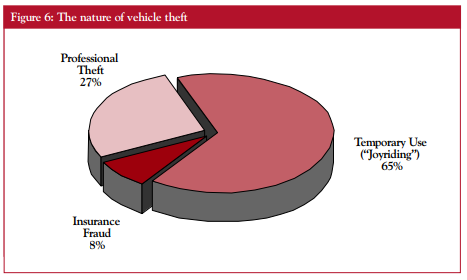
‘Vehicle Crime Reduction: Turning the Corner‘ – insurance fraud, 8% (pdf page 26 of 65)

CarCrimeUK is an independent research and analysis platform examining vehicle crime reporting, data integrity, and fraud prevention practices in England and Wales

Recent Posts:

  • When Recorded Theft Is Not Believed
  • NaVCIS Funding: Still No Specifics
  • Agreed Police disclosure procedures not followed
  • £50 for a Police Report Update?
  • Section 184 Data Protection Act 2018
  • Keyless Taking or Key Questions?
  • When ‘Sale or Return’ Goes Wrong
  • BBC Crimewatch ‘Car Cloning’
  • Keyless Vehicle Theft:
  • Accusations of Criminality
  • Thefts Down – Except for Newer Cars!
  • Increase Pre-Crush Retention Period to 28 days?
  • Reducing Vehicle Theft by up to 30%
  • ‘The Others’ … are you among them?
  • Vehicle Abandonments Raise Questions Over Theft Claims
  • The State of Vehicle Taking in the UK: A Crisis of Enforcement, Not Engineering
  • Keystone Krooks – but £1.4 million stolen!
  • 2024 Vehicle Theft – how well (or otherwise) did your constabulary perform?
  • Vehicle Crime. Is Police Language Bluring Facts?
  • Superficial Approach to Vehicle Taking Overlooked Organised Crime
  • Keyless Vehicle Taking – Really?
  • Accuracy & Consistency Required
  • Do we need new legislation?
  • A System Built on Blind Faith? The Flaws in Police Information Dissemination
  • Which? … What?
  • The Rise & Fall of Operation Igneous
  • Vehicle Taking – Quantity not Quality
  • Vehicle Theft: 30 years of Complacency
  • The Devalued Crime Report
  • Vehicle Theft Surge Demands Police Action on Crime Report Disclosures
  • FoIA – Staffordshire Police are not the worst offenders
  • Vehicle Repatriation
  • Crime Number Devaluation
  • Manufacturers Cause Vehicle Thefts …
  • PNC LoS Report Weeding
  • Staff-less-shire Police Report Disclosures
  • W. Mercia Police – RTC Report Disclosures
  • Delaying Finalisation of Insurance Claims (for some)
  • Policing (or not?) Vehicle Theft
  • Fraud Not Theft … face the facts!
  • Cloned Plates: Register of Keepers – Lacking Integrity?
  • Police Theft Report Disclosure
  • Headlamp Dazzle & Eye-Snatching
  • Scrap ‘six-week weeding’ of stolen vehicle VRMs
  • Police Vehicle Theft Reports – A Lack Of Understanding And Standardisation

Legal Disclaimer
The information provided on this website is for general informational purposes only and should not be considered legal advice. While we strive to ensure the accuracy and relevance of the content, laws and regulations change frequently, and the application of legal principles varies based on specific circumstances.

No Legal Advice
Nothing on this website constitutes legal, financial, or professional advice. You should not rely on the information provided here as a substitute for seeking qualified legal counsel. If you require legal advice or guidance, we strongly recommend consulting a licensed solicitor or legal professional.

No Liability
We make every effort to keep the information up to date and accurate, but we do not guarantee the completeness, correctness, or applicability of any content. We accept no responsibility or liability for any errors, omissions, or reliance placed on the information contained within this site.

External Links & Third-Party Content
Any external links or references provided are for convenience only and do not constitute endorsement. We are not responsible for the accuracy, legality, or content of any external sites or third-party materials linked from this website.

User Responsibility
It is the responsibility of all users to verify the accuracy and relevance of any information before relying upon it. If you have a legal issue, you should seek advice from a qualified professional relevant to your situation.

By using this website, you acknowledge and agree to this disclaimer. If you do not agree, you should discontinue use of the site immediately.

© 2026 Car Crime U.K. | Powered by Superbs Personal Blog theme