
Agreed Police disclosure procedures not followed
A recurring issue in vehicle theft cases is not recovery, but what happens afterwards.
In a recent case, a stolen vehicle was recovered, albeit damaged and released by police on 5th January 2026, indicating that enquiries at the scene and forensic examination had been completed sufficiently to allow its return. A second vehicle stolen at the same time remained outstanding.
The victim submitted a Subject Access Request (SAR) in mid-January to obtain a copy of their own crime report. This followed established procedures previously confirmed by the constabulary concerned in a formal Freedom of Information response.
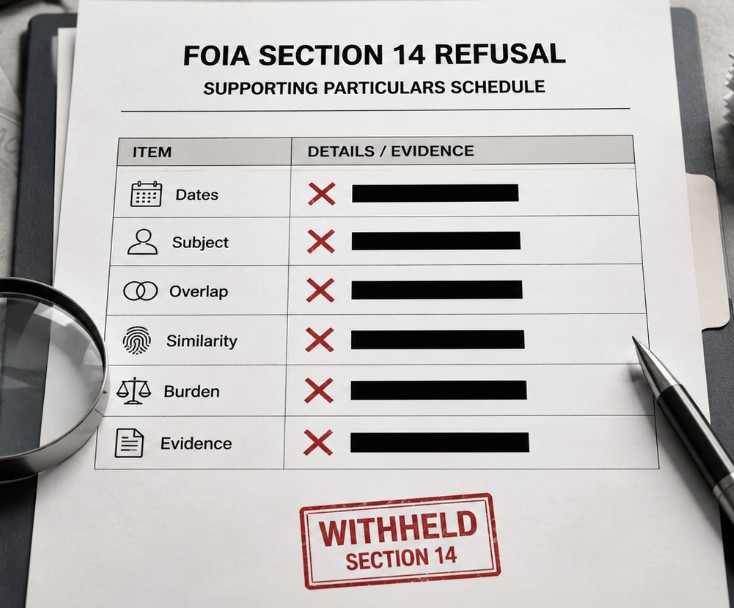
However, on the 16th January, disclosure of the crime report was refused on the basis that it had not yet been “filed,” despite the fact that:
- the vehicle had been recovered;
- forensic examination had been completed; and
- the vehicle had been released for collection in early January 2026.
The forensic examination report was received on or about 9th February, and confirmed that no suspect had been identified.
On the 12th February 2026, the detective explained that the report required supervisory review before it could be filed, and that this could not occur until his supervising sergeant returned from leave … at the end of February
This raises important questions about process and timing.
Personal data clearly existed within police systems. The issue was not the absence of information, but its administrative status. Where disclosure was delayed, the explanation given was not investigative sensitivity, but internal workflow and supervisory availability. This distinction matters.
Why this matters
Subject Access rights exist to allow individuals to understand what personal data is held about them. These rights apply to recorded personal data, regardless of whether internal administrative processes, such as supervisory review or formal filing, have been completed.
When constabularies publish procedures explaining how disclosure can be obtained, the public is entitled to expect those procedures will operate consistently in practice. The relevant Freedom of Information response explaining these procedures can be read here.
Transparency depends not only on policy, but on implementation.
The forensic report and disclosure
It is also important to recognise that, at the time the Subject Access Request was submitted and subsequently refused, the forensic examination report had not yet been received by the investigating officer.
In those circumstances, disclosure of the crime report would simply have reflected the factual position at that time, namely, that forensic enquiries were ongoing and results were pending.
The subsequent receipt of the forensic report on 9 February 2026, confirming that no suspect had been identified, did not alter the existence of the underlying crime record or the personal data already held within police systems.
This suggests that the timing of forensic examination was not, in itself, determinative of whether disclosure could occur, but rather formed part of the broader investigative timeline.
It highlights the importance of ensuring that administrative processes operate in a manner that reflects the purpose of disclosure rights, namely, to provide access to personal data held, rather than being dependent solely upon internal procedural milestones.
It is important to emphasise that this concern relates to the process rather than the individuals. The victim has complied fully with established procedures and is entitled to expect that disclosure decisions are made consistently and in accordance with statutory obligations. Raising these questions is intended to ensure clarity and consistency, and to assist in improving understanding of how disclosure processes operate in practice.
The irony of recovery
This case also illustrates an unexpected consequence.
Had the vehicle not been recovered, the investigation might have reached an earlier administrative conclusion, allowing disclosure to proceed sooner. Instead, recovery introduced additional procedural steps.
The vehicle was recovered and released on 5 January 2026.
Forensic results were available to the investigating officer by 9 February 2026. Yet disclosure remained unavailable weeks later, pending supervisory review, and has yet to occur!
Recovery, normally a positive outcome, therefore had the unintended effect of delaying access to information needed by the victim.