
An overview of the Schengen Agreement and Convention – its history, key aspects, UK involvement, and the impact of Brexit:.
Overview of the Schengen Agreement and Convention
The Schengen Agreement, signed on 14 June 1985 in Schengen, Luxembourg, by five EU countries (Belgium, France, Germany, Luxembourg, and the Netherlands), aimed to gradually abolish internal border checks between member states[1]. It was later supplemented by the Schengen Convention in 1990, which laid out the legal and operational framework for implementation, including common visa policies and police cooperation [2].
Together, these form the Schengen acquis, which was incorporated into EU law via the Treaty of Amsterdam in 1999[1].
History and Development
- 1985: Initial agreement signed by five countries.
- 1990: Schengen Convention signed.
- 1995: Schengen Area officially came into effect.
- 1999: Incorporated into EU law via the Treaty of Amsterdam.
- 2007–2025: Gradual expansion to include 29 countries, including non-EU states like Norway, Iceland, Switzerland, and Liechtenstein [2].
The Schengen Area now allows over 450 million people to travel freely without internal border checks [2].
European Commission – History of Schengen [2]
Key Aspects of the Schengen Agreement
- Abolition of internal border controls between participating countries.
- Common visa policy for short-term stays (Schengen Visa).
- Enhanced police and judicial cooperation, including cross-border surveillance and extradition.
- Schengen Information System (SIS): A shared database for law enforcement and border control.
- External border management: Harmonized rules for entry and exit.
EUR-Lex Glossary – Schengen Agreement and Convention [1]
Current Schengen Member Countries (2025)
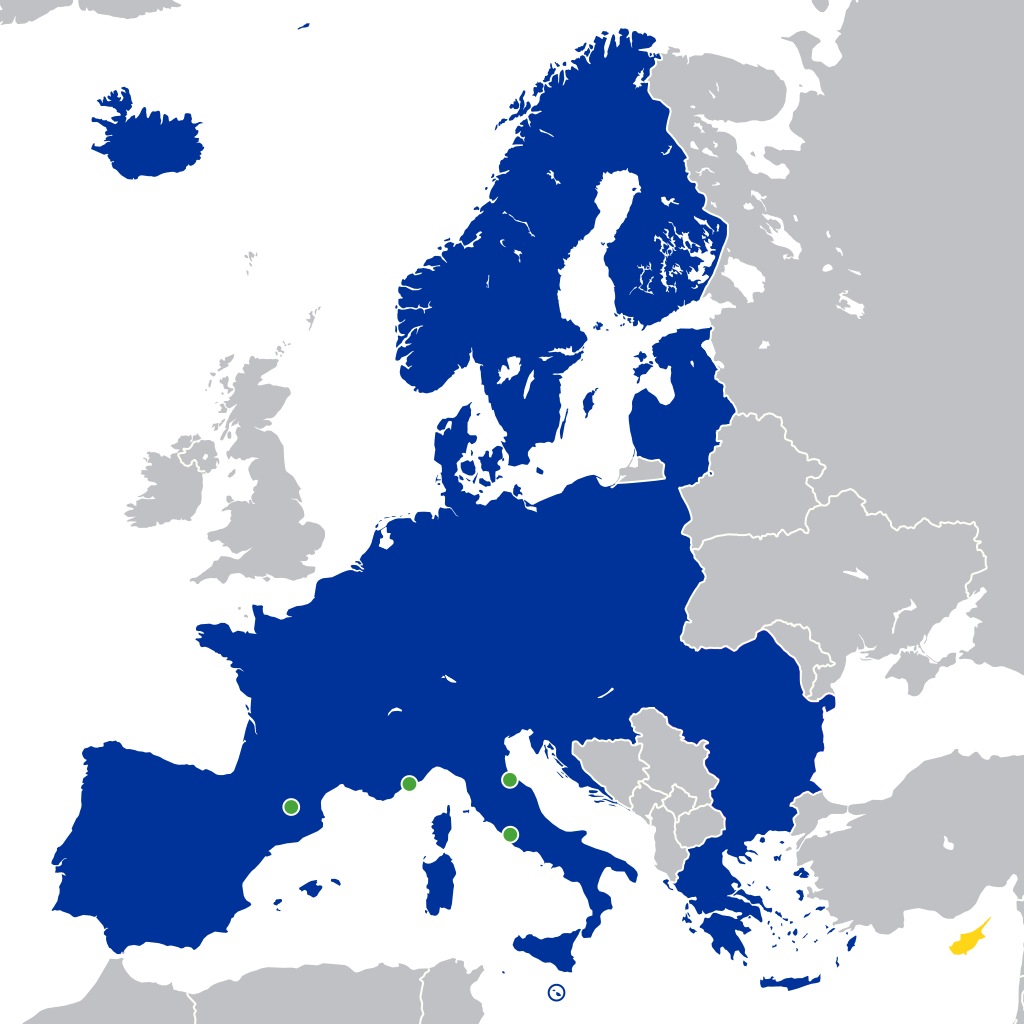
EU Members (25): Austria, Belgium, Bulgaria, Croatia, Czech Republic, Denmark, Estonia, Finland, France, Germany, Greece, Hungary, Italy, Latvia, Lithuania, Luxembourg, Malta, Netherlands, Poland, Portugal, Romania, Slovakia, Slovenia, Spain, Sweden.
Non-EU Members (4): Iceland, Liechtenstein, Norway, Switzerland.
UK’s Involvement with Schengen
The United Kingdom never signed the Schengen Agreement and opted out when it was incorporated into EU law in 1997 [4]. However, the UK:
- Participated in police and judicial cooperation under Schengen (from 2005).
- Had access to the Schengen Information System (SIS) for law enforcement purposes.
- Maintained its own visa and border control policies.
Wikipedia – UK Opt-Outs from EU Legislation [4]
Impact of Brexit on UK’s Relationship with Schengen
After Brexit:
- Free movement rights ended on 31 December 2020.
- UK citizens became third-country nationals under Schengen rules.
- They can visit Schengen countries visa-free for up to 90 days in any 180-day period.
- Long-term stays (work, study, residence) now require national visas.
- UK citizens must meet passport validity rules and may need to provide supporting documents at borders.
- The EU is introducing ETIAS and EES systems for non-EU travelers, including UK citizens [5].
UK Parliament – After Brexit: Visiting, Working, and Living in the EU [5]
References