12. The Low Cost Check That May Save £1,000’s
Buying a vehicle is often one of the largest purchases many people make outside of buying a home. Yet surprisingly little attention is sometimes given to verifying the vehicle’s history before the purchase takes place. In a market where stolen vehicles, cloned registrations and undisclosed loans or insurance write-offs circulate, a small amount of due diligence can make a significant difference.
A simple vehicle history check or ‘Vehicle Provenance’ (VP) enquiry, costing around £10 may not eliminate every risk, but it can provide valuable information that helps buyers make safer decisions.
As discussed earlier in this series, innocent purchasers can sometimes find themselves in extremely difficult situations if a vehicle later turns out to have been stolen or subject to other irregularities:
- the subject of an outstanding loan, with the finance company seeking recovery
- previously written off, handled as ‘salvage’, hurting its value
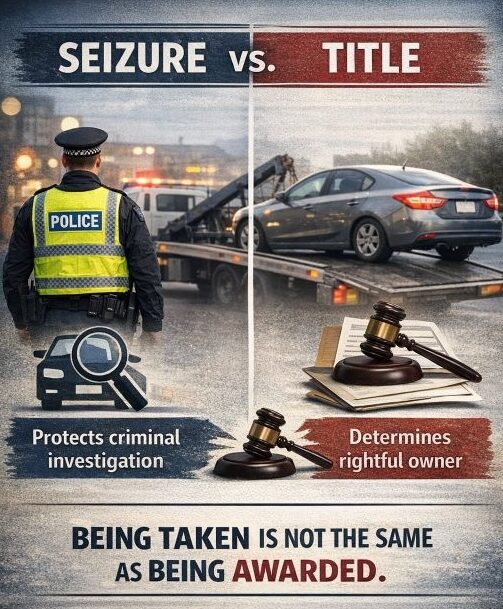
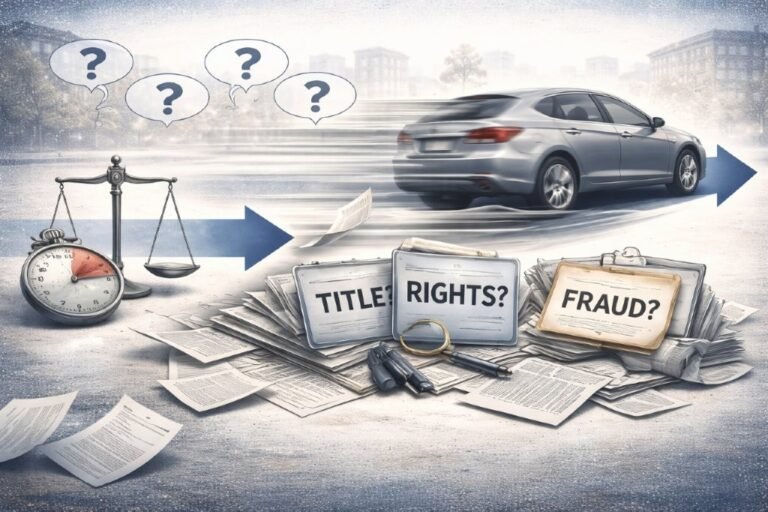
- involved in a fraudulent transaction and arguments about who has the best title
While no check can provide an absolute guarantee that a vehicle is legitimate, basic provenance checks and careful record-keeping can reduce the risk and improve a buyer’s position if problems arise later.
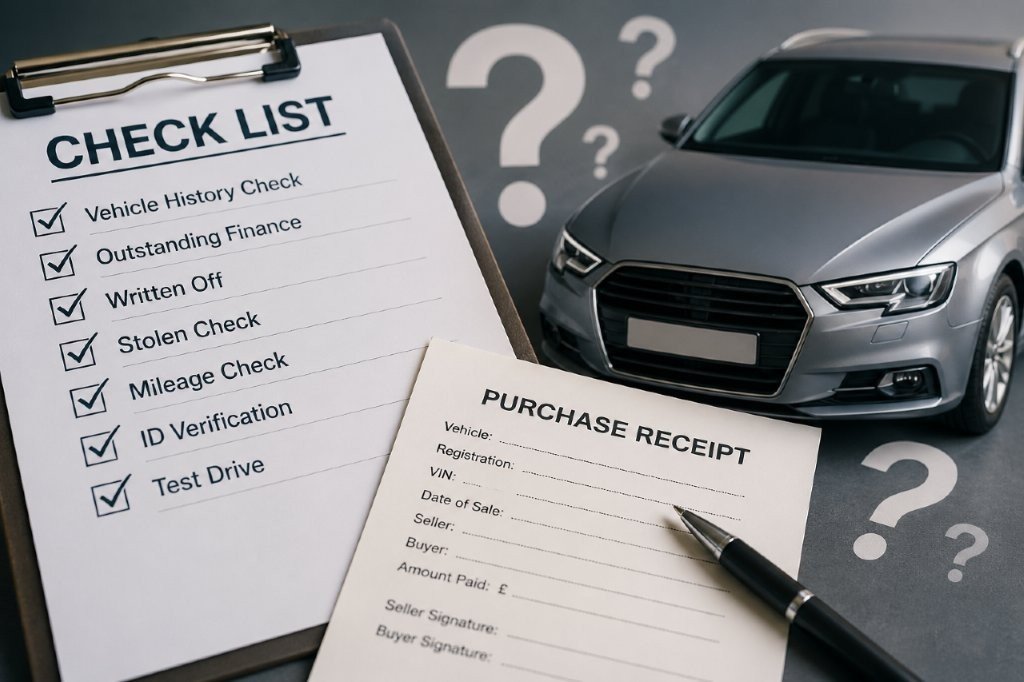
One of the most effective tools available to vehicle buyers is the vehicle history check. For a relatively small fee, buyers can access information relating to the vehicle’s recorded history. These checks may reveal issues described above
While such checks rely on available data and cannot guarantee that every problem will be detected, they represent an important first step in verifying the legitimacy of a vehicle.
Beyond history checks, buyers should also consider several additional precautions.
- it is important to retain records of the transaction.
- copies of advertisements, messages exchanged with the seller, payment receipts and identification details can all become valuable evidence if questions arise later.
- buyers should take reasonable steps to verify the identity of the seller.
- purchasing from a recognised trader may provide additional protections under consumer law, while private sales may require greater caution.
- buyers should ensure that the vehicle identification number on the vehicle matches the documentation provided. Discrepancies can indicate deeper problems.
These precautions cannot eliminate every risk. However, they can help buyers demonstrate that they acted responsibly and in good faith when purchasing the vehicle.
In situations where disputes later arise, this evidence may prove extremely valuable.
- Further advice and a template PURCHASE RECEIPT can be download here
The VP Guarantee
Not ever providers supplies a guarantee with their data and those that do generally have strict rules. Whilst some refer to these terms & conditions as the ‘small print’, they are, in fact, a best practice guide when it comes to spending your hard earned income on a vehicle you desire. READ the terms and conditions!
Be mindful of some obvious exclusions:
- Cash – is untraceable and therefore desirable by those who are practicing a deception. Do NOT pay in cash
- Pre-purchase – checking the vehicle AFTER purchase is bolting the door after the horse has bolted. The check is to prepare you, possibly warn you, BEFORE purchase.
- Obtain a purchase receipt on which the seller is clear:
- they have title to sell
- the vehicle is not stolen
- the vehicle is nto the subject of outstanding finance
- it is not a previous total loss
- the mileage is accurate
- Value – is the deal too good to be true and if so, why? If the vendor is practicing a deception they will be adept, well rehearsed and plausible. Some checks exclude a claim where the value is below a certain percentage of ‘market’ value.
- Stolen/Clones – know the limit of a check. If you acquired a clone, you almost certainly checked on a VRM that was not correct for the vehicle – such is the nature of a ‘clone’. The checking company will understandably explain they gave you correct, true & complete information about the VRM you checked up – sadly, it was not the true VRM for the vehicle.
Take care when you purchase a vehicle – as the buyer you may not realise, until it is too late, that in the event it is stolen, there will be a series of people associated with the vehicle’s title:
- the owner from whom it was stolen
- the insurer that paid out
- you
the owner receives compensation from their insurer. The insurer receives payment for the policy and return of the vehicle which leaves you … with no one to turn to, possibly not even recorded as a victim
Hopefully it will now be better appreciated why this series of posts has been provided.
Do you normally carry out a vehicle history check before buying a used car?
Next post – 13 – the last
A 13-Part Investigative Series on Theft, Recovery, Innocent Purchasers and Ownership Disputes – an overview and the individual posts:
- 11/03/2026 – A Crime Report Is Not a Title Decision
- 13/03/2026 – The Innocent Purchaser: The Forgotten Victim in Vehicle Recovery
- 22/03/2026 – Who helps the innocent? Should the Original Police Force Normally Handle the Innocent Purchaser’s Crime?
- 24/03/2026 – Police Powers to Seize Are Not Powers to Decide Ownership
- 26/03/2026 – Do Police Hand Vehicles Over Too Quickly?
- 01/04/2026 – The Police (Property) Act: A Route Many People Never Hear About
- 07/04/2026 – Insurers Often Examine More Than the Police
- 09/04/2026 – Theft to Recovery: The Longer the Gap, the Harder the Truth
- 14/04/2026 – Trackers Do More Than Recover Cars
- 21/04/2026 – The Badge, the Buyer and the Power Imbalance
- 23/04/2026 – Good Faith Is Not Enough
- 26/04/2026 – The Inexpensive Check That May Save Thousands
- 30/04/2026 – What Better Practice Would Look Like
Website Disclaimer
The information provided on this website is for general informational and research purposes only. While we strive to ensure that all content is accurate, up to date, and relevant, laws and regulations are constantly evolving. As such, the information presented may not reflect the most current legal standards or interpretations.
Nothing on this website should be construed as legal advice or a substitute for professional legal counsel. If you require legal assistance or advice specific to your circumstances, you should consult a qualified lawyer.
We accept no responsibility or liability for any errors, omissions, or inaccuracies in the content, nor for any reliance placed upon the information provided. The use of this website and its content is entirely at your own risk.
By continuing to use this website, you acknowledge and agree to these terms.