8. The Theft to Recovery Timeline
The Longer the Gap, the Harder the Truth
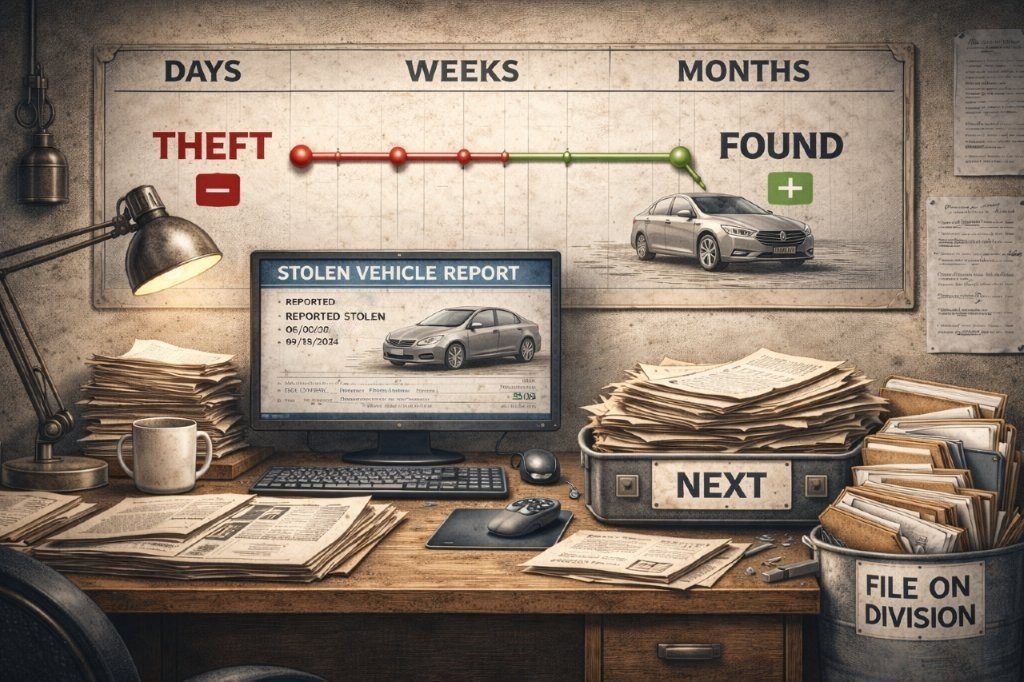
Not all stolen vehicle recoveries are alike. A vehicle recovered within days of being reported stolen presents a very different situation from one discovered months later in the hands of a new buyer. The longer the gap between the reported theft and the recovery of the vehicle, the harder it becomes to reconstruct what happened in the intervening period. Evidence fades, documents disappear, memories weaken and the chain of events becomes increasingly difficult to untangle.
Short recovery timelines can often preserve valuable evidence and provide investigators with a clearer picture of what happened after the theft. By contrast, long gaps between theft and recovery can create significant complications, particularly where the vehicle has passed through multiple hands.
Understanding the impact of time helps explain why some recovery cases become far more complex than others.
When a stolen vehicle is located shortly after the theft, the evidential trail is usually still fresh. Investigators may, if willing to undertake the process, be able to identify:
- how it was moved
- who may have handled it shortly afterwards
- whether a ‘theft’ occurred
If a purchaser is involved at this prompt recovery stage, their evidence can sometimes help investigators trace the vehicle’s movement very quickly.
However, when a vehicle reappears months later, the situation can look very different. By that stage:
- the vehicle may have changed hands several times
- documents relating to the sale may be incomplete
- communications between buyers and sellers may no longer exist
- memories of the transaction may have faded
At the same time, other developments may have occurred. The original owner may have been compensated by their insurer. The insurer may now assert rights relating to the vehicle. The innocent purchaser may have invested money in maintaining the vehicle or have increased its value by undertaking restoration. Each of these factors can make the situation more complex.
Recognising the role of time helps explain why recovered vehicle cases sometimes become complicated disputes rather than straightforward recoveries.
But is anyone, other than the person found in possession, interested or motivated to ask questions?
A stolen vehicle is a negative (-ve), the recovery perceived as a positive (+ve) … they cancel each other out, right? But what of:
- the innocent purchaser with no one to turn to for compensation?
And who considers:
- The criminals profiting from the situation?
Too complicated? No deterrent!
Next post – 9
A 13-Part Investigative Series on Theft, Recovery, Innocent Purchasers and Ownership Disputes – an overview and the individual posts:
- 11/03/2026 – A Crime Report Is Not a Title Decision
- 13/03/2026 – The Innocent Purchaser: The Forgotten Victim in Vehicle Recovery
- 22/03/2026 – Who helps the innocent? Should the Original Police Force Normally Handle the Innocent Purchaser’s Crime?
- 24/03/2026 – Police Powers to Seize Are Not Powers to Decide Ownership
- 26/03/2026 – Do Police Hand Vehicles Over Too Quickly?
- 01/04/2026 – The Police (Property) Act: A Route Many People Never Hear About
- 07/04/2026 – Insurers Often Examine More Than the Police
- 09/04/2026 – Theft to Recovery: The Longer the Gap, the Harder the Truth
- 14/04/2026 – Trackers Do More Than Recover Cars
- 21/04/2026 – The Badge, the Buyer and the Power Imbalance
- 23/04/2026 – Good Faith Is Not Enough
- 26/04/2026 – The Inexpensive Check That May Save Thousands
- 30/04/2026 – What Better Practice Would Look Like
Website Disclaimer
The information provided on this website is for general informational and research purposes only. While we strive to ensure that all content is accurate, up to date, and relevant, laws and regulations are constantly evolving. As such, the information presented may not reflect the most current legal standards or interpretations.
Nothing on this website should be construed as legal advice or a substitute for professional legal counsel. If you require legal assistance or advice specific to your circumstances, you should consult a qualified lawyer.
We accept no responsibility or liability for any errors, omissions, or inaccuracies in the content, nor for any reliance placed upon the information provided. The use of this website and its content is entirely at your own risk.
By continuing to use this website, you acknowledge and agree to these terms.