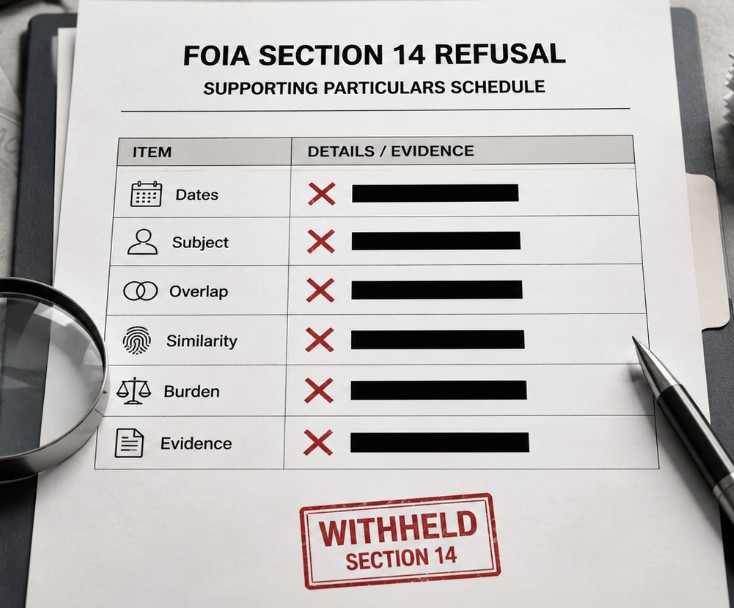
A watchdog that cannot keep up risks turning a legal right into a theoretical one The Information Commissioner’s Office (ICO) has acknowledged that complaints may now take around 40 weeks simply to be assigned to a case officer. When added to the statutory process — 20 working days for a response and up to 40…
Category: Car crime
The Problem With Crime Numbers:
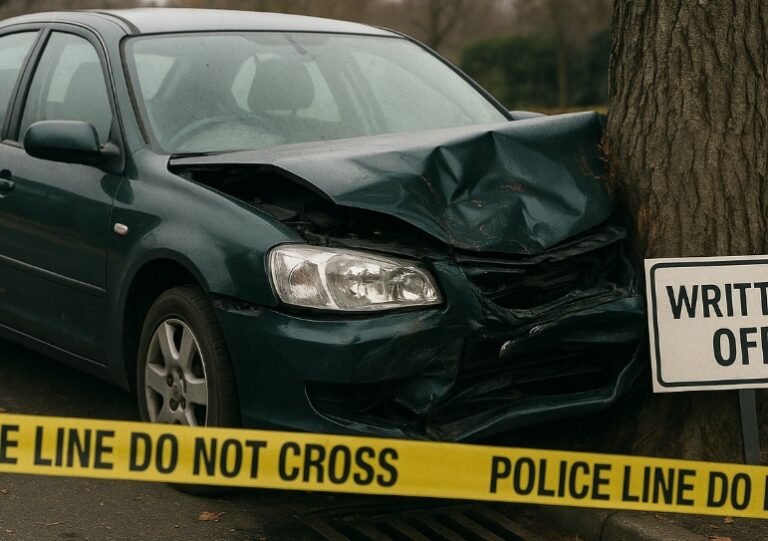
When Allegations Start to Look Like Evidence A crime reference number confirms that something was reported. It does not confirm that the crime actually happened. Yet within vehicle theft claims, crime numbers and PNC “Lost or Stolen” markers are often treated as if they validate the allegation. In a recent case, a police review concluded:…
When Recorded Theft Is Not Believed
In a recent case, a senior reviewing officer recorded doubt that a vehicle theft had occurred. The crime remains recorded. This is not about one force. It raises a wider issue: Crime reports and crime reference numbers confirm that an allegation was recorded. They do not confirm that the allegation was verified. In many cases,…
NaVCIS Funding: Still No Specifics
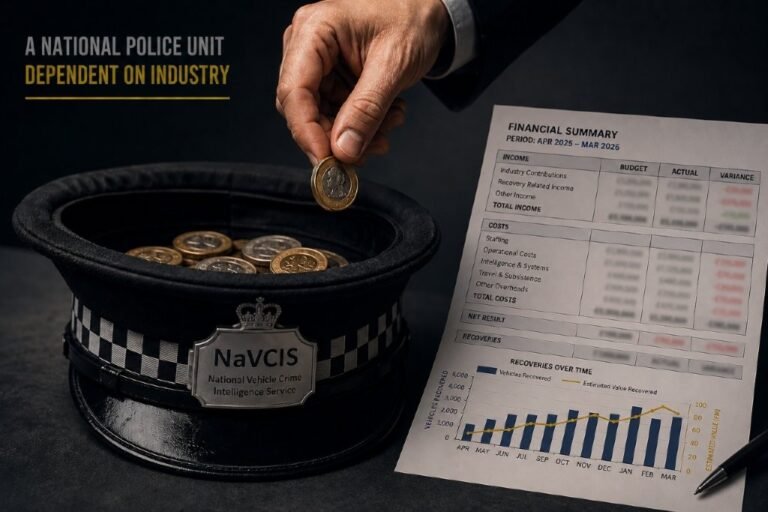
Recent Parliamentary Questions on the National Vehicle Crime Intelligence Service (NaVCIS) were intended to clarify how this body is funded and governed. The Government’s answer was familiar: ‘NaVCIS is funded by industry partners, including finance and leasing companies, insurers and hauliers’. However, this broad description raises as many questions as it answers. What remains unclear?…
Agreed Police disclosure procedures not followed
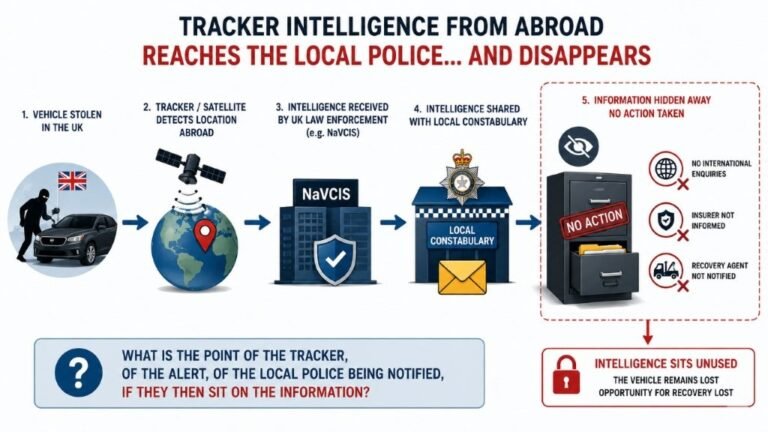
A recurring issue in vehicle theft cases is not recovery, but what happens afterwards. In a recent case, a stolen vehicle was recovered, albeit damaged and released by police on 5th January 2026, indicating that enquiries at the scene and forensic examination had been completed sufficiently to allow its return. A second vehicle stolen at…
Keyless Taking or Key Questions?
We are frequently told that “relay theft” is becoming the norm for modern vehicles. But how certain are we? In many reported vehicle removals, there is no forensic evidence establishing precisely how the vehicle was started or driven away. Yet the explanation often quickly becomes “security bypass” or “electronic compromise.” Before concluding that modern vehicle…
When ‘Sale or Return’ Goes Wrong
A Risk in the UK Automotive Market Recent events involving GVE London have brought renewed attention to a longstanding concern: the potential pitfalls of ‘Sale or Return’ (SOR) agreements. This incident is not isolated. At CMA, we are investigating traders whose conduct has ended in dispute or financial loss – raising critical questions about the…
BBC Crimewatch ‘Car Cloning’
Cloning, statistics, recoveries & components … aspects of vehicle crime warranting much more of BBC’s Crimewatch’s time. Some aspect to be aware of: • Cloning & false plating differ• Reference to 110,00 ‘cars’ being stolen is not uncommon, but this figures relates to vehicles generally. Car thefts make up about half this number• Vehicles found…
Keyless Vehicle Theft:
Evidence, Assumptions and Investigation Challenges Over recent years, keyless entry systems have frequently been cited as the primary driver of vehicle theft in the United Kingdom. In some commentary, it has been suggested that a substantial proportion of stolen vehicles are taken by “security bypass” or electronic relay methods. However, an important question arises: How…
Accusations of Criminality
Section 184 of the Data Protection Act 2018 – ‘Enforced Subject Access’ Given the delays associated with disclosure of police crime & RTC (collision) reports and that some insurance companies are excluded from engaging the ABI/NPCC MoU, it is unsurprising, some insurers or their representatives have turned to the Data Protection Act. To date, 4…