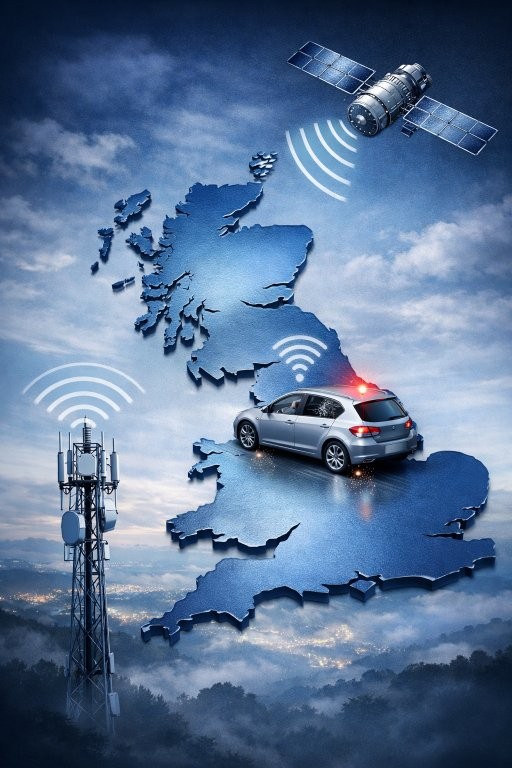
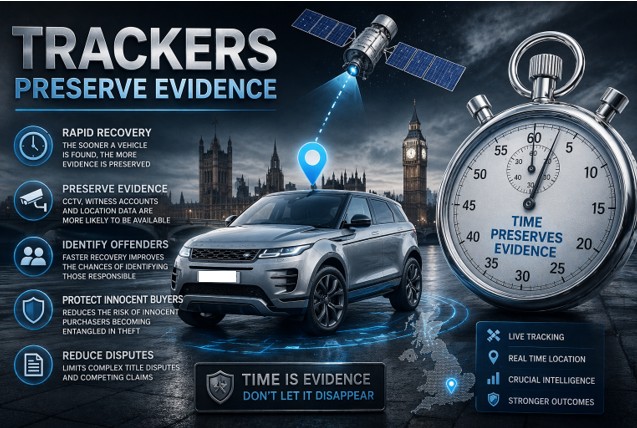
Trackers Preserve Evidence Vehicle trackers are often discussed purely as a theft-recovery tool. Their primary purpose is seen as helping police, or specialist companies, locate stolen vehicles quickly. Yet trackers can play a much broader role than simply finding a car. Rapid recovery can preserve evidence, protect innocent buyers from later disputes, and significantly improve…
Category: Car crime
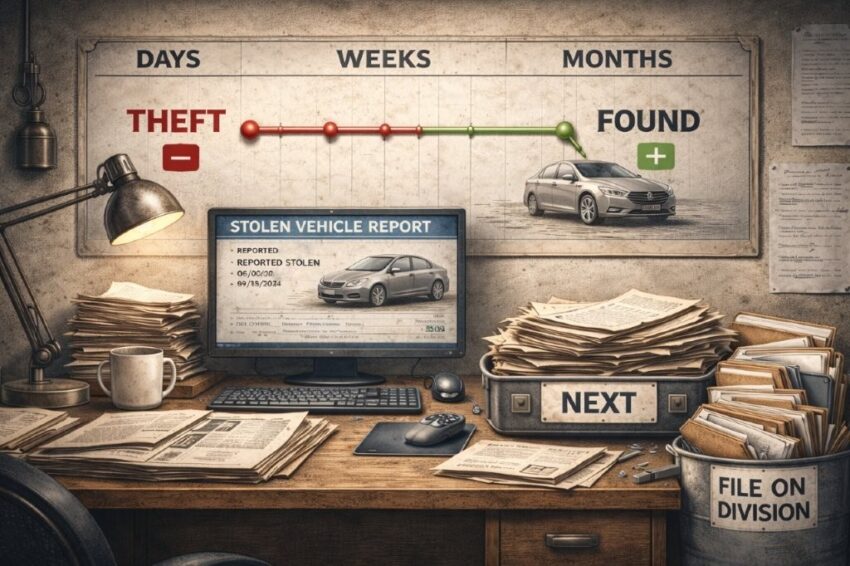
8. The Theft to Recovery Timeline
The Longer the Gap, the Harder the Truth Not all stolen vehicle recoveries are alike. A vehicle recovered within days of being reported stolen presents a very different situation from one discovered months later in the hands of a new buyer. The longer the gap between the reported theft and the recovery of the vehicle,…
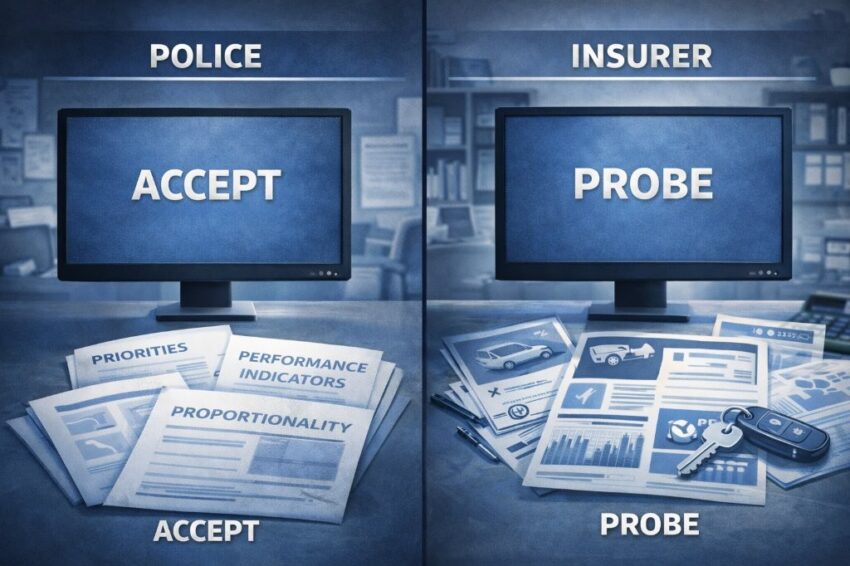
7. Investigation – Insurers vs. Police
Vehicle theft claims are rarely accepted without scrutiny by insurers. On the contrary, insurers routinely examine the circumstances of a theft claim in considerable detail. They may analyse key histories, ownership records, financial arrangements, usage patterns and test a claimant’s account. This level of scrutiny highlights an interesting contrast: while insurers may conduct detailed investigations…
6. The Police (Property) Act:
A route many may never hear about. When police seize property that becomes the subject of competing claims, there is a legal mechanism designed to resolve those disputes. Yet many innocent purchasers are never told about it. Some may come away believing the matter ends when the vehicle is taken into police possession. In reality,…
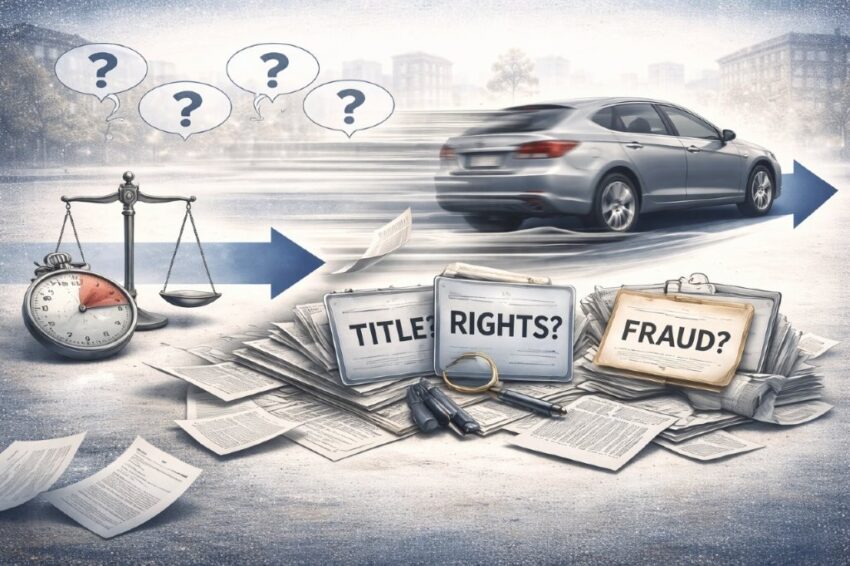
5. Moving the Vehicle Along – Disposal
Do Police Hand Vehicles Over Too Quickly? In many recovered vehicle cases, the central issue is not whether police were entitled to seize the vehicle, but what happens afterwards. Once a vehicle has been taken into police possession, decisions must be made about its future. If those decisions are made too quickly, without allowing time…
Policy Question: Is Automated Weeding Necessary?
In 2024, Gwent advised having put in place a process that would cause weeding to cease. However: This request for further information about ‘UNconfirmed PNC LoS Markers For VRMs[1], and the responses, can be found at – FoIA Request of Gwent for Weeding Statistics along with commentary; ’23/12/2025 to Gwent Police – the Irony of…
4. Police Powers to Seize Do Not Decide Ownership
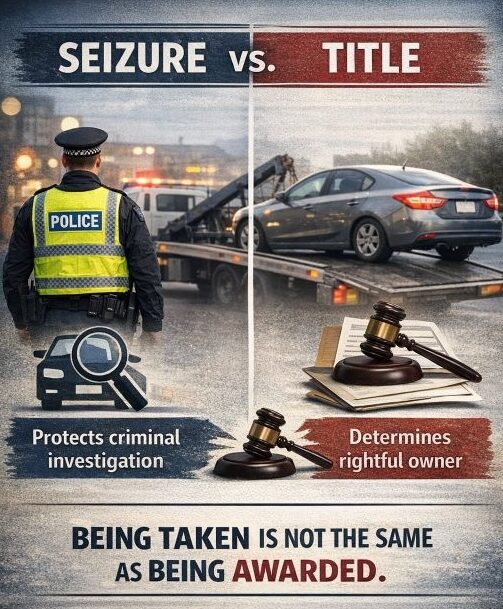
When police officers seize a vehicle suspected of being stolen, most people assume the matter is legally settled. The vehicle is taken, and the person who reported it stolen will eventually receive it back. However, this assumption overlooks an important distinction within the law. Police powers to seize property exist for investigative and evidential purposes,…
FOI Update: “Not Held” and the Question of Process
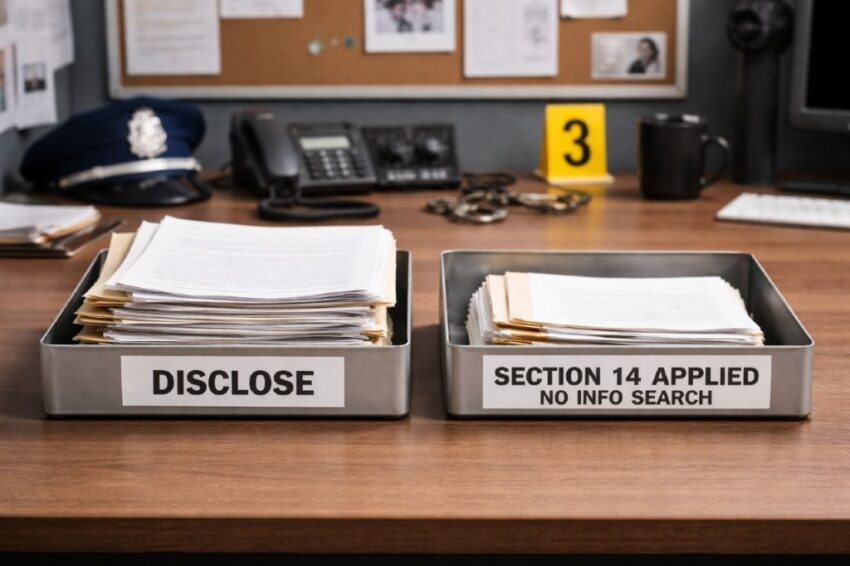
A Freedom of Information request submitted to Staffordshire Police in July 2025 has raised a broader procedural question about how requests are handled over time. The request was initially refused under section 14 (vexatious), maintained at internal review. Months later the response was revised, following ICO involvement, to a position that the information is ‘not…
3. Who Helps The Innocent?
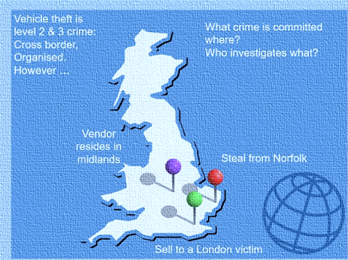
Should the Original Police Force Normally Handle the Innocent Purchaser’s Crime? When a stolen vehicle is recovered from an innocent purchaser, responsibility for dealing with that purchaser’s position is often unclear. In some cases the buyer is directed to report fraud elsewhere or pursue civil remedies independently. Yet the innocent purchaser’s situation arises directly from…
Remote Technology and Stolen Vehicles
Capability Without Coordination? Modern vehicles are increasingly connected devices. Many can receive over-the-air updates, transmit diagnostic information, and in some cases be located remotely. This often leads to a simple question: At first glance the solution appears straightforward. In practice, the situation is more complicated. Manufacturers are rarely the first organisation to learn that a…