DVLA Fraud – Inside the System
A former DVLA employee has been jailed after using his trusted access to alter vehicle records and documentation. This was not a minor paperwork offence.
Matthew Holloway manipulated DVLA records, obscured vehicle histories, created new V5C logbooks and helped increase vehicle values through falsified documentation.
That should concern everyone.
DVLA records are relied upon by buyers, traders, insurers, finance companies, provenance providers and police. They are part of the chain of trust that sits behind almost every vehicle transaction in the UK. When those records are manipulated from within, victims are created and trust is eroded.
The Bigger Question
This case should not be dismissed as one dishonest employee. The real questions are:
- How was this possible?
- How long did it continue?
- How was it detected?
- How many vehicles were affected?
- How many innocent purchasers, insurers or lenders may have relied upon false information?
- And what assurance now exists that similar manipulation cannot happen again?
DVLA has reportedly said internal controls have been strengthened. That is welcome. But given the importance of the records involved, the public is entitled to more than reassurance.
Lawful Access Remains Too Difficult
There is also an uncomfortable contrast.
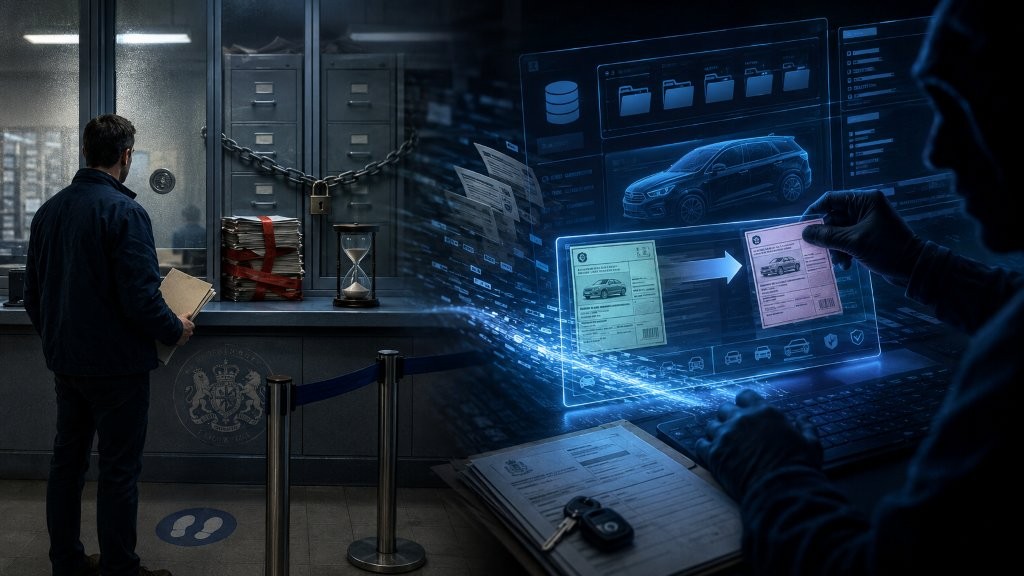
While this corrupt insider was able to manipulate vehicle records, those lawfully trying to uncover vehicle fraud and dishonesty often face slow, onerous and restrictive processes when seeking information from DVLA.
Nobody is suggesting that keeper data should be freely available. It should not.
But vehicle crime has changed. Modern vehicle fraud can involve altered identities of vehicles and individuals, false V5Cs, write-off concealment, ringing, finance fraud, provenance manipulation, export issues and innocent purchasers being left with vehicles they may never legally own.
These are not simple “stolen car” cases. They are often complex, document-heavy frauds. Yet the lawful routes for obtaining relevant information can appear paper-driven, narrow and disconnected from the reality of modern vehicle crime.
DVLA Must Adapt
Police are overstretched. Many complex vehicle fraud cases require time, specialist knowledge and detailed document analysis. Where police cannot act quickly (if at all), lawful and proportionate access to relevant DVLA information becomes more important — not less.
The answer is not open access.
The answer is better access: audited, justified, proportionate and fraud-aware.
This case raises a simple but serious question:
Vehicle crime has changed. Has the DVLA adapted?
If official records can be compromised from within, while lawful efforts to expose fraud are obstructed from outside, the system is not protecting the public as well as it should.