
02/03/2026 to Home Affairs Select Committee
Please find attached a short submission concerning structural issues in vehicle theft recording, fraud identification, and statistical integrity. The submission is anonymised and illustrative. It does not concern a complaint against any specific force. Rather, it highlights a recurring dynamic arising from:
- Allegation-led crime recording thresholds,
- Higher cancellation (“no-crime”) thresholds,
- Reactive rather than proactive fraud identification,
- Limited proactive disclosure under established MoU frameworks.
In a recent case, a senior reviewing officer recorded doubt that a theft had occurred, yet the offence remains recorded as theft.
This raises broader policy questions about:
- The relationship between recorded crime and validated criminality.
- The potential inflationary effect of allegation-led recording on national theft statistics.
- Whether fraud detection rates reflect underlying incidence or investigative resource allocation.
I appreciate the Committee’s current priorities and submit this material in the event that it may assist any future scrutiny of crime recording integrity or vehicle theft policy.
I would be pleased to provide further structured evidence if helpful.
Title – Vehicle Theft Recording, Fraud Identification and Statistical Integrity
Date – 02/03/2026
Status: Policy submission
Scope: England & Wales – Statistical review
Executive Summary
This submission raises a structural concern regarding vehicle theft recording practices in England and Wales.
In a recent case, a senior reviewing officer recorded that he did not believe a theft had occurred. Despite that assessment:
- The offence remains recorded as theft.
- No “no-crime” determination was applied.
- No fraud investigation was initiated.
- No proactive notification was made to the insurer under established MoU information-sharing arrangements.
This case is anonymised and illustrative. The issue is systemic.
- Allegation-Led Recording
Under the Home Office Counting Rules (HOCR), offences are recorded on the basis of allegation where threshold criteria are met.
The threshold for recording is low.
However:
- The threshold for cancelling (“no-criming”) is higher.
- The threshold for charging is higher still.
- The evidential threshold for insurance repudiation differs again.
Where internal review casts doubt yet cancellation thresholds are not met, the offence remains recorded.
- Statistical Consequence
If recorded theft figures include cases that investigative review does not substantiate, national vehicle theft statistics may reflect allegation rather than validated criminality. This raises the following questions:
- To what extent do recorded theft statistics include unvalidated allegations?
- What proportion of recorded thefts are subject to internal doubt?
- Are cancellation thresholds appropriately aligned with statistical integrity?
- Fraud Detection and Incentive Structure
At the point of allegation:
- There may be no confirmed insurance claim.
- There may be insufficient evidence to prosecute fraud.
- There may be limited investigative opportunity.
In such circumstances, the administrative continuation of a recorded theft may be procedurally simpler than initiating a fraud investigation or applying a cancellation.
If fraud detection depends primarily on insurer-led investigation rather than proactive policing, recorded theft totals and fraud detection figures may both be distorted.
- Information-Sharing
Appendix F of the national policing–insurance Memorandum of Understanding provides a framework for appropriate disclosure. Where internal doubt is recorded but not proactively disclosed, insurers may lack access to material relevant to fraud prevention.
This has implications for:
- Public confidence,
- Insurance pricing,
- Statistical reliability,
- Resource allocation.
Conclusion
The issue is not individual officer conduct. It concerns system design.
Where recording thresholds are allegation-led, cancellation thresholds are high, and fraud engagement is reactive, recorded vehicle theft statistics may not fully reflect validated criminality.
Parliamentary scrutiny of these structural dynamics may be warranted.
Further reading:
Operation Igneous – reducing vehicle theft by 30%
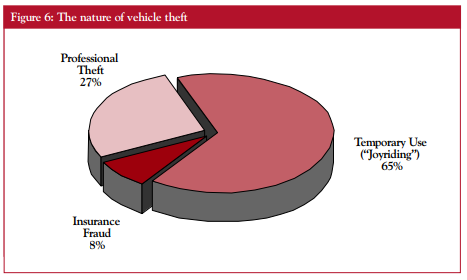
‘Vehicle Crime Reduction: Turning the Corner‘ – insurance fraud, 8% (pdf page 26 of 65)
CarCrimeUK is an independent research and analysis platform examining vehicle crime reporting, data integrity, and fraud prevention practices in England and Wales